Finish your
dissertation
without
becoming
collateral
damage.
High-fidelity writing coaching for scholars who refuse to sacrifice their sanity for their signature page.
Trusted by researchers at
Lorem ipsum dolor sit amet, consectetur adipiscing elit, sed do eiusmod tempor incididunt ut labore ipsum dolor sit

Holly Bolly
Stanford PHD mathematics
Lorem ipsum dolor sit amet, consectetur adipiscing elit, sed do eiusmod tempor incididunt ut labore ipsum dolor sit

Lukas Birro
Bogazici PolSci
Lorem ipsum dolor sit amet, consectetur adipiscing elit, sed do eiusmod tempor incididunt ut labore ipsum dolor sit

Nefertiti Petite
Kastamonu Sütçü İmam Üniv.
Your draft isn't messy because
you're failing. It's messy because
the system expects you to be a
machine.
The modern doctorate is built on a "Cruelty Doctrine"—the idea that if you aren't suffering, you aren't working hard enough. This leads to a paralyzed creative process.
When writing feels like a threat to your worth, your brain shifts into survival mode. You don't need more "discipline." You need a method that respects your humanity.
This is for you if:
- Your dissertation feels like a dark cloud following you through your weekends.
- You have 50+ open browser tabs and a feeling of mounting intellectual dread.
- Feedback from your advisor feels like a personal indictment rather than guidance.
- You've forgotten why you even liked your research topic in the first place.

The Methodology
01 — 03Name the real problem
We strip away the "procrastination" label and identify the specific conceptual hurdles or psychological blocks halting your progress.
Build around real life
No 4:00 AM routines. We design writing slots that fit your energy levels, family obligations, and actual cognitive capacity.
Keep the draft moving
Using structured accountability and "low-stakes" drafting techniques, we ensure you never stare at a blank page for more than five minutes.
"Before coaching, I was ready to quit my program. Six months later, I've defended my prospectus and I actually enjoy my mornings again. The 'cruelty' is gone. I write because I have something to say — not because I'm terrified of what happens if I don't."
Dr. Elena Rodriguez
Anthropology & Comparative Literature, Columbia University

Escaping the Cruelty
Doctrine.
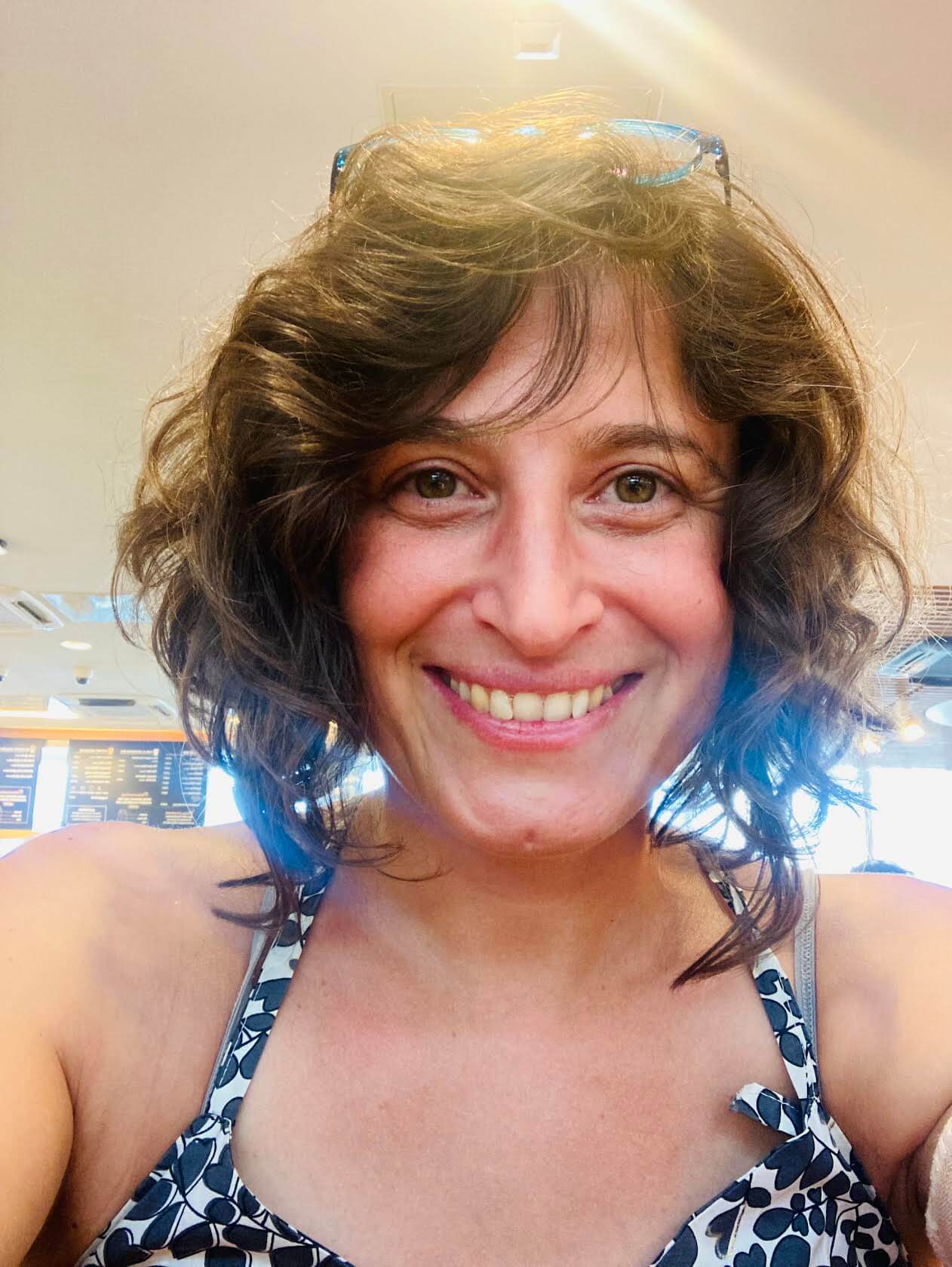
I founded NESLI after surviving my own PhD in Philosophy. I watched brilliant peers drop out or collapse under the weight of an academic culture that prizes suffering as a metric of success.
I realized that the most rigorous scholarship doesn't come from burnout—it comes from a place of intellectual safety and structured compassion.
My mission is to help you finish your draft without losing your mind.
Before you decide, you probably
want to know a few things.
"I'm not sure I need coaching — maybe I just need to try harder."
If trying harder were going to work, it would have worked by now. The scholars who come to me aren't lazy — they're some of the most intelligent, driven people in any room. The issue is almost never effort. It's that the system gave you a set of invisible rules that actively sabotage complex creative work. Coaching doesn't replace your effort; it redirects it so the hours you spend actually produce pages, not spirals.
"Will this work for my specific discipline?"
I've worked with scholars across the humanities, social sciences, STEM, law, and interdisciplinary programs. The methodology is discipline-agnostic because it targets the universal architecture of how complex writing actually happens — how arguments develop, how drafts accumulate, how motivation sustains over months and years. Whether you're writing about Heidegger or protein folding, the process of moving from messy thinking to polished manuscript follows the same deep patterns.
"How is this different from my advisor's guidance?"
Your advisor evaluates your scholarship. I support the person producing it. Advisors — even wonderful ones — operate within an institutional power dynamic that makes it nearly impossible to be fully honest about where you're stuck. Coaching creates a space with zero evaluative pressure where we can address the real obstacles: the workflow problems, the psychological blocks, the structural confusion, the life circumstances. I'm not a replacement for your committee. I'm the ally they can't be.
"What does the coaching actually look like week to week?"
We begin with a deep intake session to map your specific situation — where you are in the process, what's working, what isn't, and what your life actually looks like right now. From there, we meet weekly or biweekly for focused sessions that combine strategic planning, draft review, accountability calibration, and real-time problem-solving. Between sessions, you have structured milestones and asynchronous support. The rhythm is steady, sustainable, and designed to keep the draft moving without consuming your life.
"I can barely afford my rent — is this realistic for a grad student budget?"
I understand the financial reality of academic life intimately. That's why the initial alignment call is completely free — no obligation, no pressure. During that call, we'll discuss whether coaching is the right fit and explore the options available, including flexible structures. Many scholars find that the cost of not finishing — extended tuition, delayed career entry, the compounding toll on mental health — far exceeds the investment in support that actually moves the needle. But I'd rather you make that calculation yourself, with full information.
The Alignment Promise
Your first full session is protected by a complete satisfaction guarantee. If after our initial working session you feel this isn't the right fit — for any reason, stated or unstated — you owe nothing. No invoice, no awkwardness, no questions. I'd rather you walk away whole than stay out of obligation. That's the Cruelty Doctrine's trick, and we don't do that here.
Put down the stick. Ship
the draft. Keep your mind.
Limited cohort spaces this quarter. Currently accepting applications for Fall 2025.
Your free alignment call is the first step — no commitment, no pressure, just clarity.